Copper Peptides for Fine Lines: What the Research Actually Says
Share
Copper peptides show up in a lot of skincare marketing, but what does the actual research say about their effect on fine lines?
The Basics of Skin Aging
Fine lines form as skin loses collagen and elastin over time, both structural proteins that keep skin firm and bouncy. Environmental stress, repeated expressions, and natural aging all play a role in this process.
What Copper Peptides Are Studied For
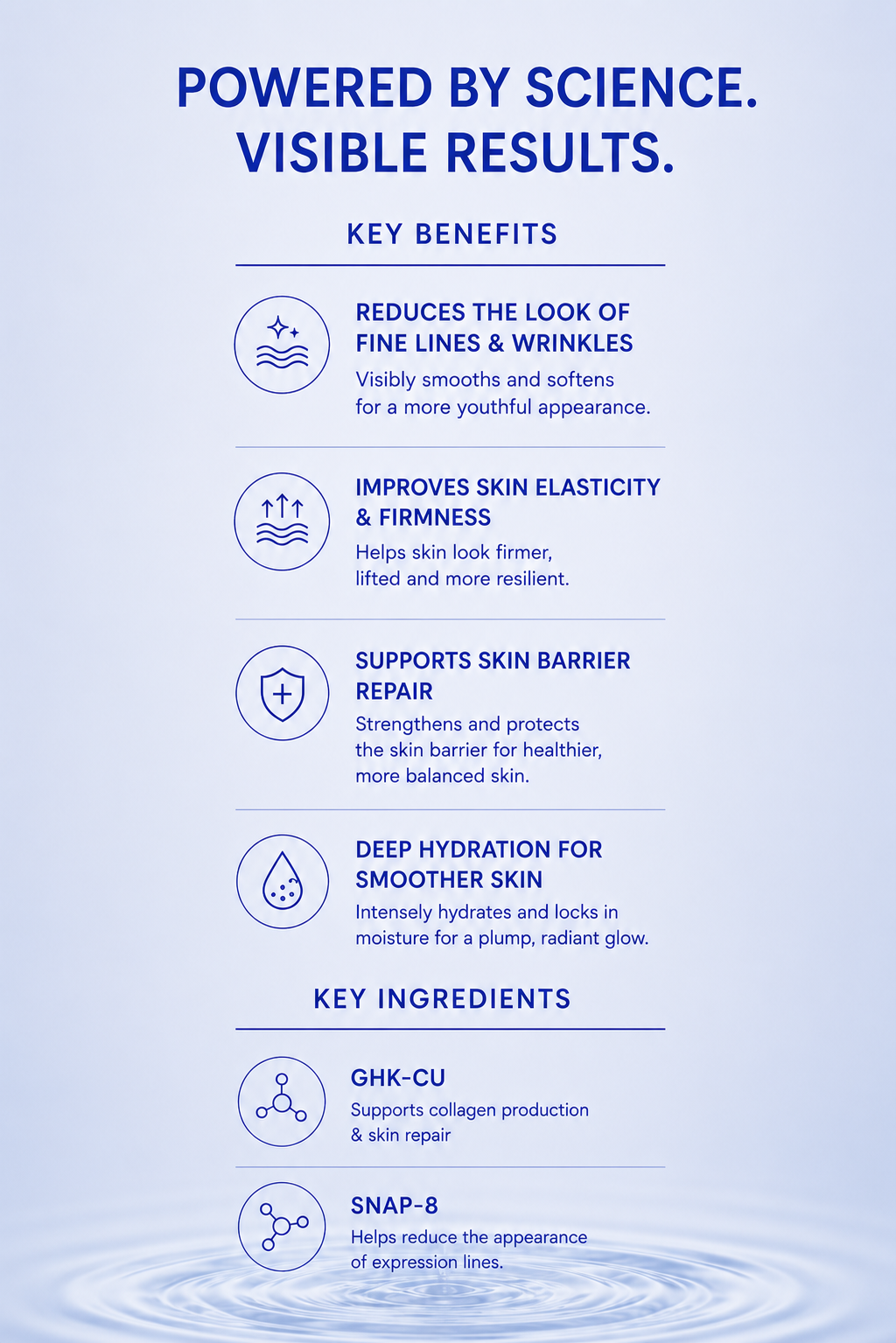
GHK-Cu has been researched for its potential role in supporting the skin's natural repair processes and encouraging collagen production. The idea is straightforward: if collagen loss contributes to fine lines, supporting collagen production may help address the visible result over time.
Realistic Expectations
No topical ingredient works overnight, and copper peptides are no exception. Research and consistent use both point to gradual improvement over weeks of regular application, not an instant fix. If a product promises immediate results, that's worth being skeptical of.
Why Formulation Matters
Not all copper peptide products are created equal. Concentration, stability, and delivery method (like an airless pump versus a dropper) all affect how much of the active ingredient actually reaches your skin in usable form. This is part of why we formulated our serum the way we did, pairing GHK-Cu with SNAP-8 and protecting it with airless delivery.
The Bottom Line
Copper peptides are a genuinely well-researched category, not just a trend. Used consistently and formulated thoughtfully, they're a reasonable, evidence-informed choice for addressing the visible signs of aging over time.
Ready to try it? Shop the Copper Peptide Repair Serum →